
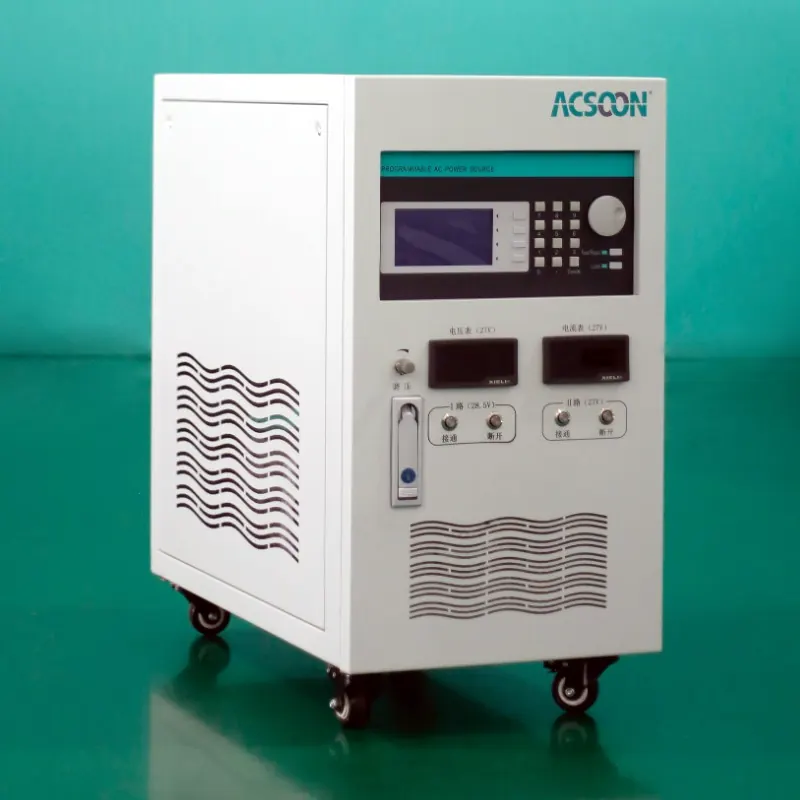
The ACSOON ACSW dual-output programmable AC power source is a cabinet configuration for equipment development, production testing and quality verification. Specify the requirements for both outputs when you request a quote.
Use an ACSW programmable AC supply to repeat voltage and frequency settings during R&D and production checks. The ACSW series supports programmed steps for voltage, frequency, rise time and run duration. Confirm the sequence and remote interface with the model you select.
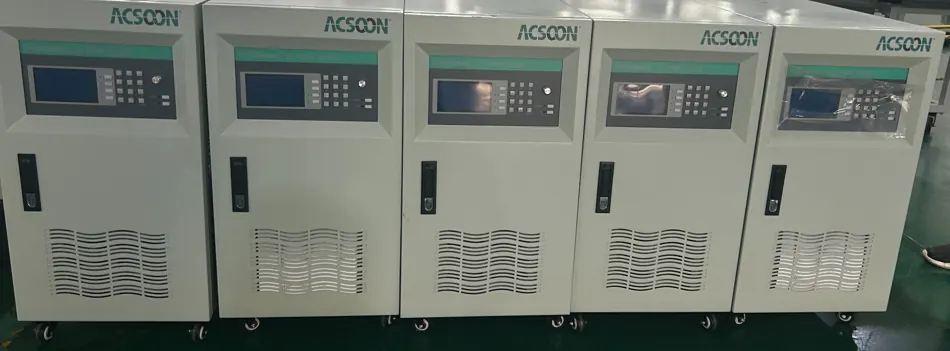
The table shows published ACSW series reference ranges. Your cabinet quotation specifies the rating and connection requirements of both outputs.
| Site input | Single- or three-phase AC, depending on model. |
|---|---|
| AC voltage options | Series options include 0–150 / 0–300 V L–N for single-phase units and 0–260 / 0–520 V L–L for three-phase units. |
| AC frequency | 40–800 Hz adjustable on applicable ACSW models. |
| Remote communication | RS-232 / RS-485 are listed for the series. Confirm the required interface. |
| Dual-output cabinet | Confirm AC or DC, voltage and current for each output, plus simultaneous loading and total kVA. |
View ACSW series specifications
Can both outputs run at the same time?
Specify each load and the expected overlap. ACSOON can confirm simultaneous operation and the available rating for the selected cabinet.
Can I order one AC output and one DC output?
Send the voltage and current required for each output and the frequency and phase of the AC load. ACSOON will confirm availability for your project.
Can the cabinet support automated test sequences?
The ACSW series lists programmable test steps and RS-232/RS-485 communication. Share the commands and measurements you need to confirm the interface and supported functions for the quoted model.
Which frequency and voltage ranges apply to my model?
The table shows series reference ranges. Confirm the required voltage and frequency together with load current so the quote identifies the operating range for your cabinet.
Send your site input voltage and phase, the output type and voltage/current for each load, the required AC frequency range, and whether both outputs must run together. Include your test sequence or control interface if required.